In an era when the media industry is under constant scrutiny for how it represents race, equity, and truth, few spaces have proven as enduring — or as discreetly influential — as the Journal-isms Roundtable. Operated by veteran journalist Richard Prince, the Roundtable has, for more than two decades, served as a unique forum where journalists gather not simply to network, but to wrestle with the most pressing and uncomfortable questions facing their profession.
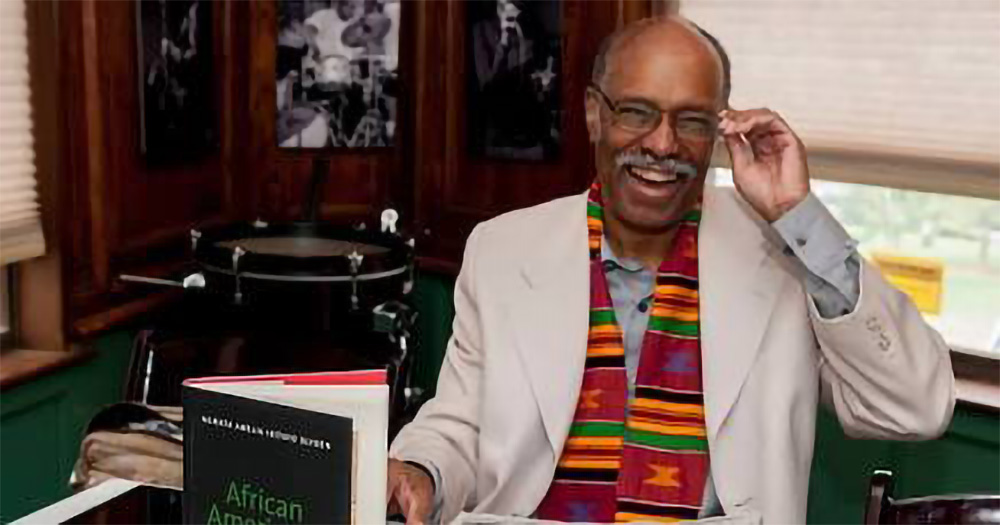
Courtesy of American University School of Communication and AALBC
Founded in 1999 as an extension of Prince’s widely respected Journal-isms column, the Roundtable emerged at a time when conversations about diversity in journalism were often sidelined or treated as secondary concerns. Prince, a longtime observer and critic of newsroom culture, envisioned something different: a recurring space where journalists of varying backgrounds, beats, and levels of seniority could engage in candid dialogue about how the press covers race — and how it often fails to do so.
What distinguishes Prince’s Journal-isms Roundtable is not its intentional informality paired with intellectual rigor. Initially held as monthly gatherings in Washington, D.C. the Roundables are all now on ZOOM, giving a national and sometimes international conversation, and conducted as hybrids ‘HYBRIDS,” MEETING ON ZOOM AS WELL AS IN PERSON).
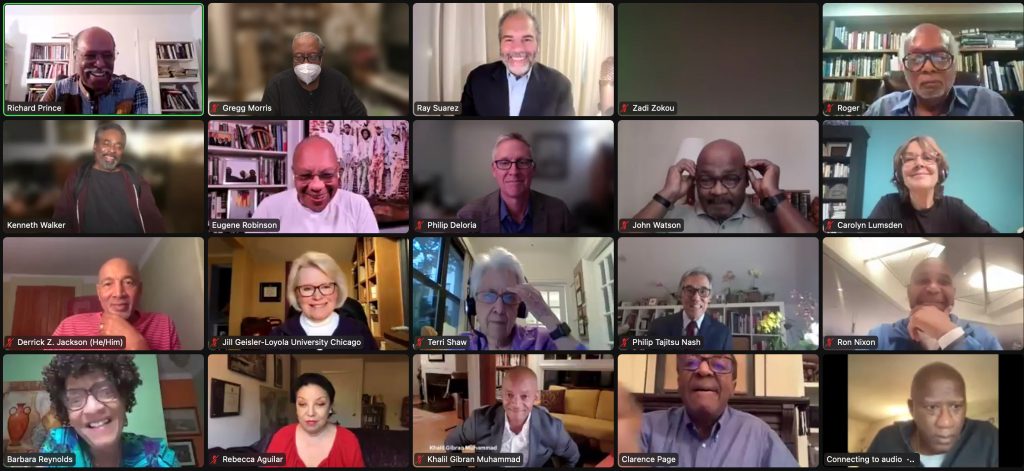
Scores of Participants, September 26, 2022
Yet beneath their convivial atmosphere lies a serious purpose. Participants — who most often include reporters, editors, academics, media executives, and students— come prepared to discuss topics that are as urgent as they are complex: Racial bias in reporting, the lack of diversity in newsroom leadership, inequities in coverage, and the ethical dilemmas that arise when telling stories about marginalized communities.
Unlike formal conferences or industry panels, the Roundtable fosters a sense of openness that encourages participants to speak frankly. There is no rigid agenda dictating the conversation, and while guest speakers are often invited, the emphasis remains on dialogue rather than presentation. This structure allows for a fluid exchange of ideas, where emerging journalists can challenge veterans, and where lived experiences carry as much weight as professional credentials.
Over time, the Roundtable has become something of an intellectual commons for journalists concerned with equity and representation. Its influence is not measured in headlines or viral moments, but in the steady shaping of perspectives. Conversations that begin at the Roundtable often ripple outward — into newsrooms, classrooms, and editorial decisions — subtly informing how stories are framed and whose voices are included.
Central to the Roundtable’s mission is the belief that journalism cannot be fully understood— nor responsibly practiced — without grappling with race. Prince’s Journal-isms column has long documented disparities in media coverage and employment, and the Roundtable extends that work into a live, participatory setting. Here, issues that might otherwise remain abstract become immediate and personal.
A discussion about representation in political reporting, for example, might draw on the firsthand experiences of reporters who have struggled to pitch stories about communities of color, or who have faced resistance when raising concerns about biased language.
The Roundtable also plays a critical role in mentorship and community-building. For younger journalists, particularly those from underrepresented backgrounds, it offers rare access to established professionals who are willing to share insights, advice, and support. These interactions often extend beyond the meetings themselves, fostering relationships that can help shape careers. In an industry where informal networks frequently determine opportunities, the Roundtable provides a more inclusive alternative.
In recent years, the Roundtable has adapted to changes in both the media landscape and the broader world. The shift toward virtual and hybrid formats—accelerated by the COVID-19 pandemic — has expanded its reach beyond Washington, allowing participants from across the country to join the conversation. This evolution has brought new voices into the fold, enriching discussions while maintaining the core ethos of openness and critical inquiry.
At the same time, the issues addressed by the Roundtable have only grown more urgent. Debates over misinformation, the role of the press in a polarized society, and the ongoing struggle for racial justice have placed new pressures on journalists. In this context, the Roundtable serves as both a sounding board and a source of accountability. It challenges participants to reflect on their own practices and to consider how journalism can better serve an increasingly diverse public.
Yet the Roundtable’s impact lies as much in what it resists as in what it promotes. It resists the notion that diversity is a box to be checked, or that conversations about race can be neatly resolved. Instead, it embraces complexity and ongoing dialogue, recognizing that progress in journalism—like progress in society—is incremental and often contested.
For all its significance, the Journal-isms Roundtable remains relatively low-profile, known primarily within media circles. This modesty is, in many ways, a strength. Free from the pressures of branding or commercialization, it has been able to maintain its focus on substance over spectacle. Its success is measured not by visibility, but by the quality of its conversations and the commitment of its participants.
As the journalism industry continues to evolve, spaces like the Journal-isms Roundtable will remain essential. They provide a reminder that the work of improving media is not confined to newsrooms or boardrooms, but happens also in the spaces where journalists come together to listen, question, and learn from one another.
In the end, the Roundtable stands as a testament to the power of dialogue—sustained, honest, and inclusive — to shape not only how journalism is practiced, but how it understands its role in a diverse and changing society.

the WORD Editor Gregg W. Morris

Richard Prince’s Journal-isms Roundtable: A Quiet Force Shaping Conversations on Race and Media
In an era when the media industry is under constant scrutiny for how it represents race, equity, and truth, few spaces have proven as enduring — or as discreetly influential — as the Journal-isms Roundtable. Operated by veteran journalist Richard Prince, the Roundtable has, for more than two decades, served as a unique forum where journalists gather not simply to network, but to wrestle with the most pressing and uncomfortable questions facing their profession.
Courtesy of American University School of Communication and AALBC
Founded in 1999 as an extension of Prince’s widely respected Journal-isms column, the Roundtable emerged at a time when conversations about diversity in journalism were often sidelined or treated as secondary concerns. Prince, a longtime observer and critic of newsroom culture, envisioned something different: a recurring space where journalists of varying backgrounds, beats, and levels of seniority could engage in candid dialogue about how the press covers race — and how it often fails to do so.
What distinguishes Prince’s Journal-isms Roundtable is not its intentional informality paired with intellectual rigor. Initially held as monthly gatherings in Washington, D.C. the Roundables are all now on ZOOM, giving a national and sometimes international conversation, and conducted as hybrids ‘HYBRIDS,” MEETING ON ZOOM AS WELL AS IN PERSON).
Scores of Participants, September 26, 2022
Yet beneath their convivial atmosphere lies a serious purpose. Participants — who most often include reporters, editors, academics, media executives, and students— come prepared to discuss topics that are as urgent as they are complex: Racial bias in reporting, the lack of diversity in newsroom leadership, inequities in coverage, and the ethical dilemmas that arise when telling stories about marginalized communities.
Unlike formal conferences or industry panels, the Roundtable fosters a sense of openness that encourages participants to speak frankly. There is no rigid agenda dictating the conversation, and while guest speakers are often invited, the emphasis remains on dialogue rather than presentation. This structure allows for a fluid exchange of ideas, where emerging journalists can challenge veterans, and where lived experiences carry as much weight as professional credentials.
Over time, the Roundtable has become something of an intellectual commons for journalists concerned with equity and representation. Its influence is not measured in headlines or viral moments, but in the steady shaping of perspectives. Conversations that begin at the Roundtable often ripple outward — into newsrooms, classrooms, and editorial decisions — subtly informing how stories are framed and whose voices are included.
Central to the Roundtable’s mission is the belief that journalism cannot be fully understood— nor responsibly practiced — without grappling with race. Prince’s Journal-isms column has long documented disparities in media coverage and employment, and the Roundtable extends that work into a live, participatory setting. Here, issues that might otherwise remain abstract become immediate and personal.
A discussion about representation in political reporting, for example, might draw on the firsthand experiences of reporters who have struggled to pitch stories about communities of color, or who have faced resistance when raising concerns about biased language.
The Roundtable also plays a critical role in mentorship and community-building. For younger journalists, particularly those from underrepresented backgrounds, it offers rare access to established professionals who are willing to share insights, advice, and support. These interactions often extend beyond the meetings themselves, fostering relationships that can help shape careers. In an industry where informal networks frequently determine opportunities, the Roundtable provides a more inclusive alternative.
In recent years, the Roundtable has adapted to changes in both the media landscape and the broader world. The shift toward virtual and hybrid formats—accelerated by the COVID-19 pandemic — has expanded its reach beyond Washington, allowing participants from across the country to join the conversation. This evolution has brought new voices into the fold, enriching discussions while maintaining the core ethos of openness and critical inquiry.
At the same time, the issues addressed by the Roundtable have only grown more urgent. Debates over misinformation, the role of the press in a polarized society, and the ongoing struggle for racial justice have placed new pressures on journalists. In this context, the Roundtable serves as both a sounding board and a source of accountability. It challenges participants to reflect on their own practices and to consider how journalism can better serve an increasingly diverse public.
Yet the Roundtable’s impact lies as much in what it resists as in what it promotes. It resists the notion that diversity is a box to be checked, or that conversations about race can be neatly resolved. Instead, it embraces complexity and ongoing dialogue, recognizing that progress in journalism—like progress in society—is incremental and often contested.
For all its significance, the Journal-isms Roundtable remains relatively low-profile, known primarily within media circles. This modesty is, in many ways, a strength. Free from the pressures of branding or commercialization, it has been able to maintain its focus on substance over spectacle. Its success is measured not by visibility, but by the quality of its conversations and the commitment of its participants.
As the journalism industry continues to evolve, spaces like the Journal-isms Roundtable will remain essential. They provide a reminder that the work of improving media is not confined to newsrooms or boardrooms, but happens also in the spaces where journalists come together to listen, question, and learn from one another.
In the end, the Roundtable stands as a testament to the power of dialogue—sustained, honest, and inclusive — to shape not only how journalism is practiced, but how it understands its role in a diverse and changing society.
the WORD Editor Gregg W. Morris
Categories
2026FeaturesJournalismNews, Commentary Opinion Fit to PrintRichard Prince's Journal-ismRichard Prince's Journal-ism Roundtabe